

Fajas, also known as waist trainers or compression shapewear, are widely marketed as a practical tool for slimming the waist and promoting weight loss. Social media posts and before-and-after photos have fueled the belief that wearing a faja can burn belly fat or permanently reduce waist size.
This raises an important question: do fajas actually help with weight loss, or do they just change how the body looks while wearing them?
To answer this accurately, we need to break down the science of how weight loss works biologically. Finally we need to review how compression garments affect the body mechanically, then clear-up the confusion between the two topics.
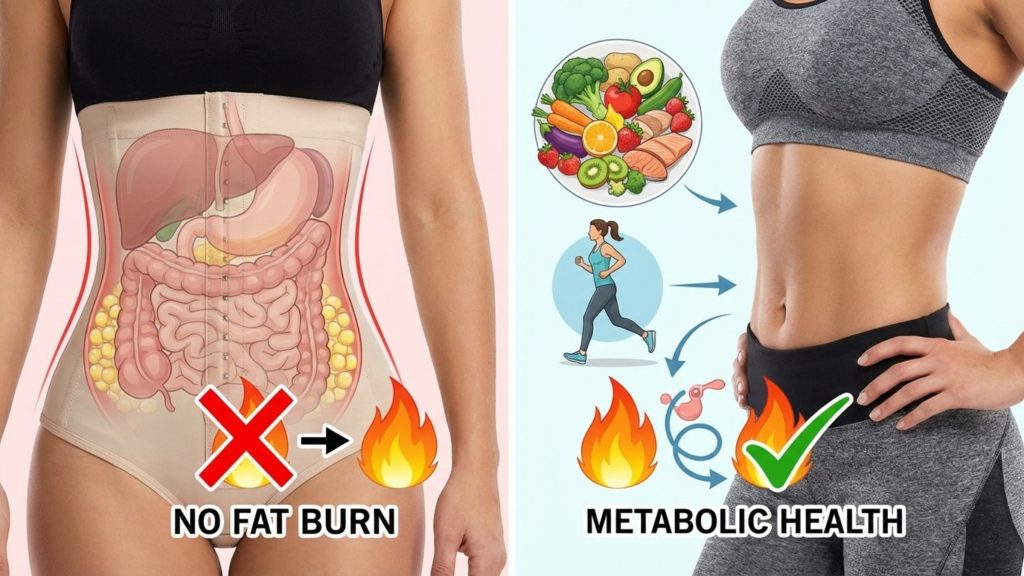
What a Faja Is Designed to Do?
A faja is a tight compression garment used by women after giving birth, and to support recovery after abdominal surgery or cosmetic procedures. Its primary purpose is structural change not metabolic. The pressure to the abdomen and torso from the faja helps stabilize muscles, fascia, ligaments and tendons, reduce swelling, and support posture during recovery and healing.
From a functional medicine standpoint, fajas do not influence how the body burns calories, breaks down fat, or regulates hormones related to weight. They act on the outside of the body, while on the other hand weight loss occurs internally through metabolic processes.
This clarification is importantl, because many weight-loss myths get started when structural changes are mistaken for internal metabolic change.
Why Fajas Create the Illusion of Weight Loss?
The reason weight loss is often mistaken with fajas is simple: they compress the body and change its shape immediately. When the waist is compressed inward, the belly appears flatter, the waistline looks smaller, and posture often improves. Clothing may fit differently, leading people to think about weight loss as a result..
It may appear weight loss occurred. But the truth is, no fat cells are broken down, and no stored energy is used. Once the garment is removed, the body returns to its previous shape.
This is why all health care professionals refer to fajas as shapewear, not weight-loss tools.
Sweat, Water Weight, and the Fat-Loss Myth
Another reason people believe fajas help with weight loss is increased sweating. Compression garments trap heat, which can cause the abdominal area to sweat more than usual. This often leads to short-term drops in scale weight, reinforcing the belief that fat is being burned.
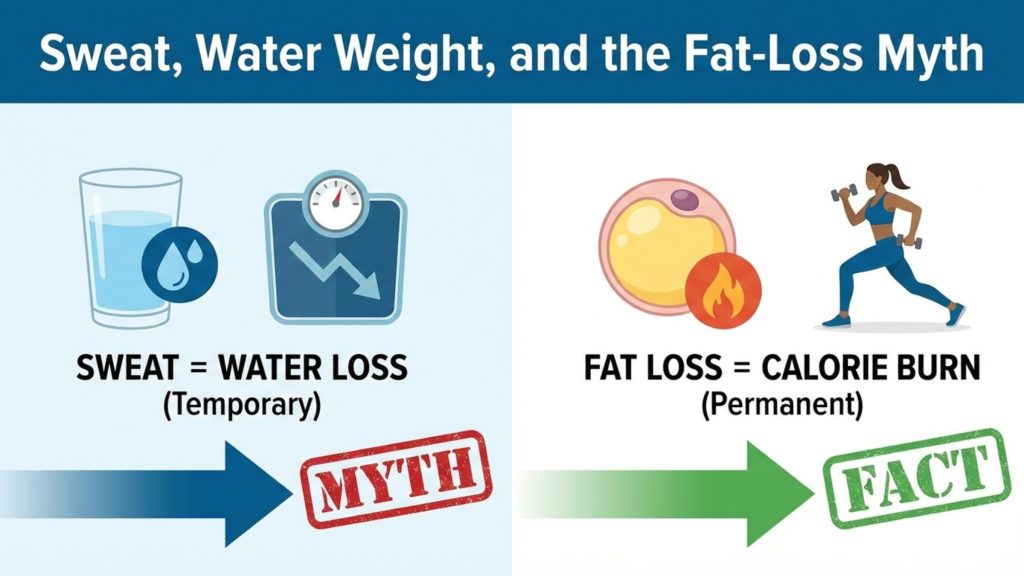
Sweating causes temporary water loss, not fat loss. As soon as fluids are replaced, body weight returns to baseline. Fat loss requires the body to burn calories, which promotes hormonal and metabolic changes that compression alone cannot create.
All health authorities agree sweat does not equal fat loss, regardless of where it occurs.
Can Fajas Reduce Belly Fat?
There is no scientific evidence that wearing a faja reduces belly. The idea that fat can be burned from one specific area through compression or heat is a long-standing myth.
Fat loss occurs, as a result of correct food choices,, activity level, and overall energy balance. No garment, belt, or wrap can affect these biological rules. Functional medicine experts and exercise scientists recognize weight loss is not possible simply by wearing a faja..
Situations Where Fajas May Be Helpful
Although fajas do not cause weight loss, they do have legitimate uses in specific situations. Functional medicine physicians like myself recommended fajas to support healing and comfort, not weight loss.
Fajas are commonly used:
- After abdominal or cosmetic surgery to reduce swelling and support tissue healing
- After giving birth to provide temporary abdominal support
- For posture support during recovery from injury
In these cases, the goal is stability and comfort—not fat loss.
Potential Downsides of Using Fajas for Weight Loss
When fajas are used excessively or relied on as a weight-loss strategy, they can cause problems. Tight or long-term use of compression can impair breathing, digestion, and core muscle strength. Over time, compression can weaken core muscle strength..
Functional medicine experts warn, fajas should not replace exercise, or core strengthening, especially when worn tightly for long periods.
What Actually Leads to Sustainable Weight Loss?
True weight loss is driven by changing the internal environment,, not external compression. Long term fat loss occurs when adequate nutrition, movement, proper sleep, stress reduction, and hormonal balance work together to create a healthy metabolism..
While a faja may temporarily change how the body looks under clothing, it does not alter metabolism, stop food cravings, or fat storage. Confusing what fajas can and cannot do often leads to frustration and unrealistic expectations and results.
Conclusion: Do Fajas Help With Weight Loss?
Fajas do not help with weight loss period..
They can make the waist appear smaller while wearing them, improve posture, and provide structural support. They do not burn fat, increase metabolism, or cause permanent weight loss.
Fajas shape the body temporarily, but they do not change how the body functions.
For lasting weight loss, the focus must be on proper mindset, eating a whole food, primarily plant based diet,, movement, and metabolic health—not compression garments.