

It’s time to take your shoes off, put your swimming suit on, bubbles and hot water rising — for many, a hot tub is the best way to relax after a long day. But it’s also become part of a bigger conversation: can soaking in a hot tub actually help you lose weight?

Popular stories have recently circulated about this “hot” topic, and a few research studies even support the idea. But before we announce jacuzzis, the next big weight-loss hack, it’s important to look at what research actually says about this matter.
Let’s explore this topic through a functional medical lens — to see if there is evidence to support the claims being made?
Do Hot Tubs Burn Calories? Science Says: Yes — But the Amount Matters
One of the most common reasons people think hot tubs help with weight loss is calorie burn. The logic is clear: hot water raises your body temperature, and the body’s metabolism gets revved up. Research suggests that raising the body temperature— like soaking in a hot tub — does increase energy spending.
In one study, participants relaxing in hot water burned about 140 calories in a one-hour session, roughly equivalent to a 30-minute walk. Another study found a 30-minute soak in a hot tub at ~104°F (40°C) can burn between 80–130 calories, depending on body type, exact temperature, and the amount of time in the tub.
But here’s an important consideration: this isn’t nearly as efficient as actual physical activity. Walking, jogging, cycling, swimming, or strength training burns significantly more calories in the same timeframe.
In other words, hot tubs can burn calories — but the effect is mild compared with real exercise.
How Does Heat Therapy Influence Your Body?
Soaking in hot water activates a set of healthy body responses:
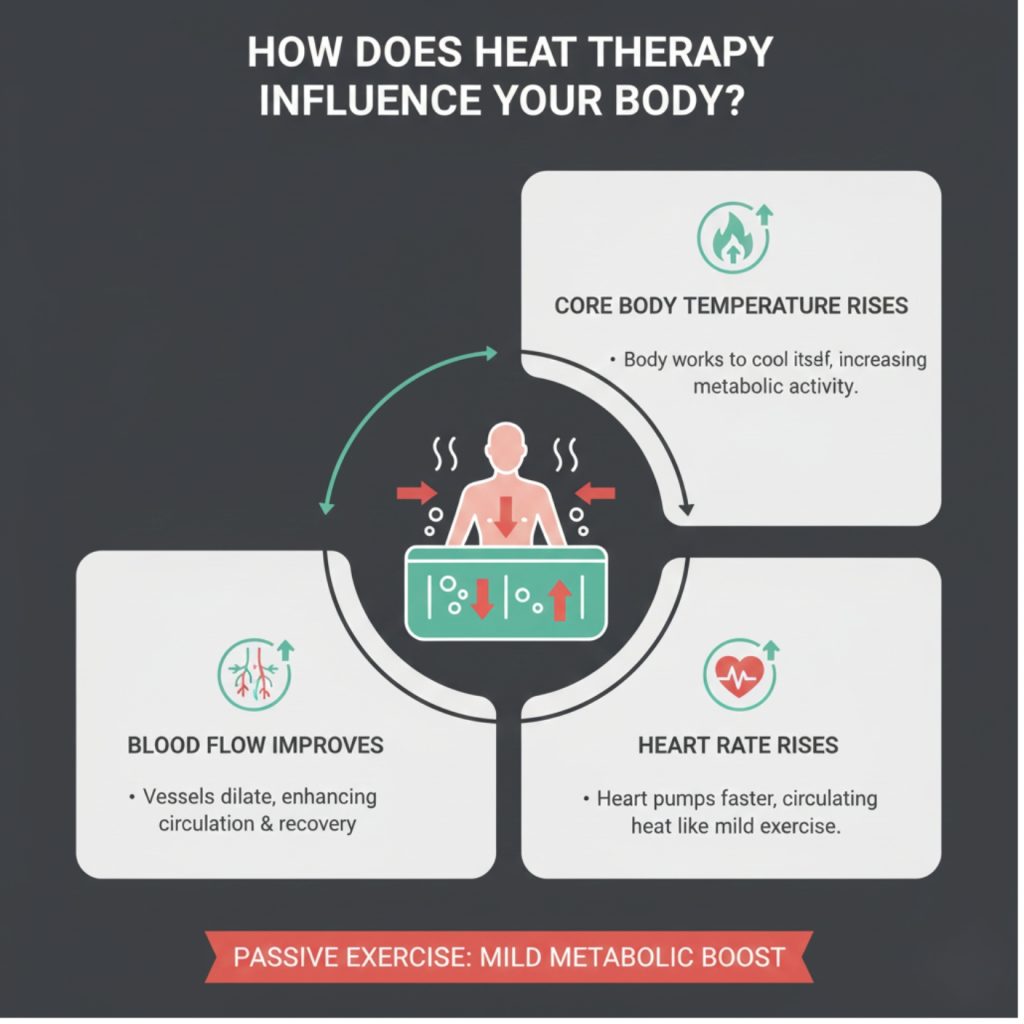
- Core Body Temperature Rises: Your body works to cool itself, which increases metabolic activity, even if you’re not moving.
- Heart Rate Rises: Like mild exercise, your heart pumps a bit faster to circulate heat.
- Blood Flow Improves: Heat causes blood vessels to dilate, improving circulation and helping with recovery after workouts.
These positive metabolic actions are why some studies describe hot tub immersion as “passive exercise” — the body is working internally to regulate temperature and blood flow. But “passive exercise” does not equate to significant fat loss on its own.
What Does Research Studies Show?
There are a few interesting scientific studies on hot tub effects on weight loss:
- A randomized study in the British Journal of Sports Medicine found that a hot tub bathing could burn about as many calories as 30 minutes of walking and even improved post-meal blood sugar control.
- Some small studies suggest that regular heat therapy — like hot tub bathing — may modestly improve glycemic control, lower blood pressure, and produce beneficial anti-inflammatory effects.
- A research project found weight loss and improvements in metabolic markers after several weeks of regular hot water bathing in adults along with diet and exercise. However this effect is most likely a result of combined lifestyle factors not heat alone.
These findings are interesting, but they are not conclusive evidence that hot tubs cause sustained weight loss on their own.
Why Heat Alone Doesn’t Make You “Lose Weight” Permanently?
There’s an important distinction between short term calorie burn and long-term weight loss. Hot tubs may increase calorie burning slightly, but:
- The amount is small — comparable to light walking, not even high-intensity exercise.
- Heat causes fluid shifts, meaning some early weight change can be due to water loss, not fat loss.
- A long-term reduction in calorie consumption is necessary— you still need to burn more energy than you take in to lose body fat.
Here is the bottom line: soaking in a hot tub for an hour burns some calories, but nowhere near what an exercise session does. Weight loss requires calorie burning over weeks and months — a hot tub on its own doesn’t create that.
Indirect Ways Hot Tubs Might Support Weight Loss
While hot tubs don’t replace exercise, they can support healthy habits that help with weight loss:
1. Stress Reduction and Cortisol Regulation
Hot tubs can soothe the nervous system, reducing stress — and chronic stress is known to increase cortisol, a hormone linked to appetite and abdominal fat accumulation.
2. Better Sleep Quality
Relaxing in a hot tub before bedtime can improve sleep quality. Good sleep supports appetite regulation and metabolic health.
3. Muscle Recovery
Hot tub bathing can reduce muscle soreness, which helps you recover faster and encourage routine workouts.
These indirect benefits do help support weight loss success over months — not overnight.
So What’s the Bottom Line?
Do hot tubs help with weight loss? Yes — but only in a very modest way. Hot tubs can:
- Burn some calories during passive heat exposure
- Improve circulation and recovery
- Reduce stress and improve sleep
- Support overall wellbeing
None of these benefits replace regular exercise and eating whole, unprocessed foods, which remain the foundation of effective weight management. Hot tubs can support your weight loss journey, but they won’t do the heavy lifting themselves.
Key Takeaways
- Soaking in a hot tub can modestly increase calorie burn — roughly comparable to light walking in some studies.
- Hot tub therapy triggers some health benefits that mirror some of the benefits of mild exercise— but it’s not a substitute for real exercise.
- Hot tubs may indirectly support weight loss through stress reduction, better sleep, and improved recovery.
- Long-term fat loss still depends on consistent daily healthy habits.