
Cream of Rice is often recommended in fitness circles, medical diets, and bodybuilding communities as a “clean” carbohydrate. It’s easy to digest, gluten-free, and commonly used when people want a simple source of energy. But when weight loss is the goal, a more specific question arises: is Cream of Rice actually good for weight loss, or does it work against it?
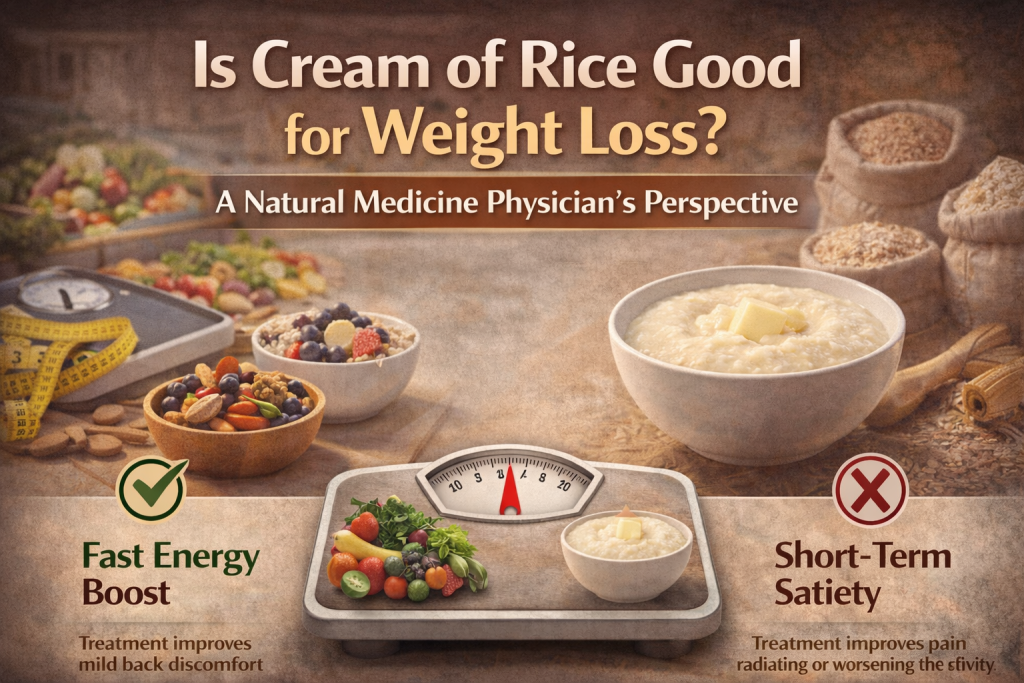
The answer depends less on the food itself and more on how it affects blood sugar, appetite, digestion, and overall calorie balance. To understand where Cream of Rice fits, we need to look at what it is nutritionally—and what it is not.
What Cream of Rice Actually Is?
Cream of Rice is a refined rice cereal made from milled white rice. During processing, the bran and germ are removed, leaving mostly starch. The result is a soft, smooth cereal that digests quickly and is gentle on the gastrointestinal tract.
Nutritionally, Cream of Rice is primarily carbohydrate with very little fiber, fat, or protein. Because of this composition, it provides quick energy but limited satiety on its own. This characteristic is central to understanding its role in weight loss.
According to the USDA nutritional data on refined rice products, foods like Cream of Rice are low in fat and protein but high in rapidly digestible carbohydrates, which can influence hunger and blood sugar response.
Calories and Weight Loss: Neutral, Not Magical
From a calorie perspective, Cream of Rice is not inherently fattening. A typical serving provides a moderate amount of calories, making it easy to control portions. Weight loss still depends on maintaining a calorie deficit, and Cream of Rice can fit into that framework if portions are appropriate.
However, calorie neutrality does not automatically mean weight-loss friendly. Foods that digest quickly often lead to faster return of hunger, which can increase total daily intake if not balanced properly.
This is why many clinicians emphasize that calorie control and satiety matter just as much as calorie count itself, especially for long-term weight management.
Blood Sugar, Insulin, and Appetite
Because Cream of Rice is low in fiber and highly refined, it has a relatively high glycemic impact. This means it raises blood sugar quickly, which triggers insulin release. For some people, especially those with insulin resistance (which is about 60% of the population of people living in western cultures) or a history of blood sugar swings, this can lead to increased hunger shortly after eating.
Research on high-glycemic foods consistently shows that rapid digestion can contribute to reduced satiety and increased appetite a short while after a meal of cream of rice.
Cream of Rice becomes “bad,” when it becomes a staple in one’s diet and it does mean it is rarely effective as a standalone meal for weight loss.
Why Is Cream of Rice Popular in Calorie Restrictive Diets?
Despite its limitations, Cream of Rice remains popular in structured dieting plans, especially among athletes. The reason is control. It is predictable, easy to measure, and unlikely to cause digestive distress.
When paired with high fiber foods, Cream of Rice can be used strategically during weight loss because it:
- Allows precise calorie tracking
- Provides fast energy for workouts
- Is easy to digest when appetite is low
In these contexts, it’s often combined with high fiber foods, protein or fat to slow digestion and improve satiety—something refined cereal lacks on its own.
Sports nutrition guidelines frequently note that refined carbohydrates can be useful around training, but less ideal as primary meals during calorie restriction.
Cream of Rice vs Whole-Grain Options
Compared to whole grains like oats or brown rice, Cream of Rice is lower in fiber, vitamins, minerals and micronutrients. Fiber plays a key role in appetite control, gut health, and blood sugar stability—three factors strongly linked to sustainable weight loss.
Whole-grain cereals:
- Slow digestion
- Improve fullness
- Provide sustained energy
- Reduce overeating later in the day
This is why many weight-loss guidelines prioritize higher-fiber carbohydrates for everyday meals.
Cream of Rice, by contrast, works best when digestion speed is desirable, not when fullness is the primary goal.
When Cream of Rice Fit Into Weight Loss?
Cream of Rice can support weight loss when used intentionally, not automatically. It may be appropriate:
- As a pre-workout meal paired with protein
- During periods of digestive sensitivity
- When appetite is low and calories need to be controlled precisely
It is less effective as:
- A standalone breakfast
- A primary source of carbohydrates throughout the day
- A satiety-focused meal during calorie restriction
The context determines the outcome.
A Functional Medicine Perspective on Sustainability
From a clinical standpoint, sustainable weight loss depends on foods that support appetite regulation, blood sugar stability, and long-term adherence. Cream of Rice disrupts these goals if it is consumed routinely, unless it is paired thoughtfully with a diet of whole plant based foods like fruits, vegetables, whole grains, beans, along with raw nuts and seeds.
This is why it is often used in short-term, controlled dietary phases, rather than as a long-term staple in weight-loss plans.
Conclusion: Is Cream of Rice Good for Weight Loss?
Cream of Rice is not a weight-loss food, but it can be a weight-gain food if it is eaten routinely..
It is a refined carbohydrate but can fit into a weight-loss plan when small portions are consumed periodically and it is paired with high fiber foods, protein and healthy fats to improve satiety. On its own, it digests too quickly to reliably support appetite control or blood sugar stability.
The most accurate takeaway is this: Cream of Rice can be useful occasionally during weight loss when used for short term energy before workouts, but it is not ideal as a foundation food for long-term fat loss.
Weight loss is built on overall whole food diet strategy, not individual ingredients—and Cream of Rice is best viewed as a short term tool, not a solution.