
Back pain is often blamed on injury, posture, muscles, or the spine itself. Soda, on the other hand, is usually discussed in the context of weight gain, blood sugar, or dental health. Because these two topics seem unrelated, many people are surprised when someone asks the question: can drinking soda actually cause back pain?
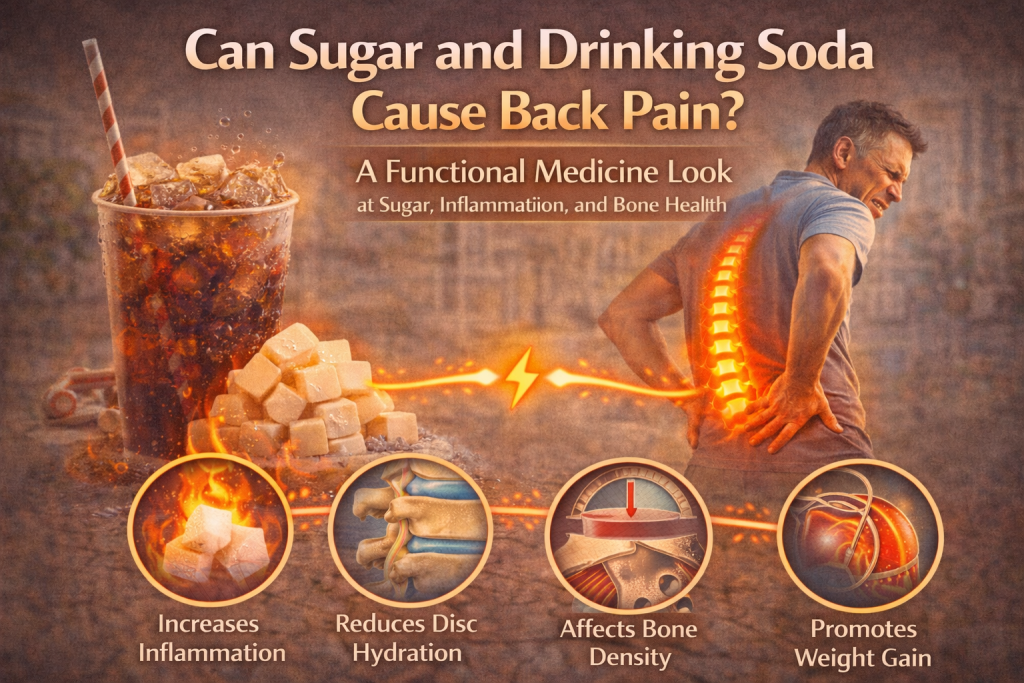
The answer is not as simple as soda directly causing back pain or injury to the spine. However, regular soda consumption can contribute to several biological processes that increase the likelihood of back pain, especially over time. To understand the connection, we need to look at inflammation, hydration, bone health, and metabolic effects.
Soda, Sugar, and Inflammation
Most sodas contain large amounts of added sugar, often in the form of high-fructose corn syrup, cane sugar or other artificial sweeteners. High sugar intake is known to increase systemic inflammation in the body. Inflammation does not stay confined to one area—it can affect muscles, joints, and connective tissue throughout the body.
Chronic low-grade inflammation has been linked to increased pain sensitivity and worsening musculoskeletal discomfort. According to Harvard Health’s overview of sugar and inflammation, diets high in added sugars are associated with inflammatory markers that can increase pain.
When inflammation is elevated, existing back issues such as muscle strain, disc irritation, or joint stiffness can feel more painful and take longer to recover.
Dehydration and Disc Health
Another overlooked factor is hydration. Many people replace water with soda throughout the day, which can lead to chronic under-hydration. While soda is a liquid, caffeinated and sugary beverages do not hydrate the body as effectively as water.
As discussed in spinal health research, the spaces between each bone in the spine, the discs rely heavily on water content to maintain their height and shock-absorbing ability. Poor hydration can reduce flexibility of the disc and increase stiffness, particularly in the lower back.
The National Institutes of Health notes that poor hydration can cause damage to musculoskeletal tissues, including muscles and connective structures.
While soda alone does not “dry out” discs, replacing water with soda can contribute to conditions that make back pain more likely.
Phosphoric Acid and Bone Health
Cola-type sodas contain phosphoric acid, which has been studied for its potential impact on bone health. Excessive intake of phosphoric acid—especially when combined with low calcium intake—can interfere with bone mineral composition.
Lower bone density does not directly cause back pain, but it increases the risk of vertebral weakness, compression issues, and spinal degeneration over time. The Mayo Clinic’s discussion on soda and bone health explains that frequent soda consumption may displace calcium-rich beverages, indirectly affecting skeletal strength
Over time, weakened spinal structures can contribute to chronic back discomfort.
Weight Gain and Mechanical Stress
Soda is one of the largest contributors of added sugar in modern diets. Regular consumption of soda is significantly associated with weight gain. Excess body weight places additional mechanical stress on the spine, particularly the lower back.
Increased abdominal weight shifts posture forward, increasing the lumbar and muscle strain. The CDC’s research on obesity and musculoskeletal pain has proven excess weight is a major risk factor for chronic back pain
In this way, soda contributes indirectly by promoting conditions that overload the spine.
Kidney Issues and Referred Back Pain
Heavy soda intake—especially colas—has been associated with kidney stone formation due to changes in mineral balance and fluid intake. Kidney stones can cause severe pain that radiates to the lower back or flank area.
While this is not common in moderate soda drinkers, it is another example of how soda-related health effects can present as back pain rather than digestive or urinary symptoms.
When Soda Is Unlikely the Cause
It’s important to be clear: drinking soda does not directly cause acute back injuries. If back pain is sudden, severe, or associated with neurological symptoms, it should not be attributed to soda consumption alone.
Soda-related back pain tends to be indirect, gradual, and influenced by long-term habits rather than one drink or one day of intake.
A Holistic Medical Perspective
From a functional medicine standpoint, soda affects the entire body. It influences inflammation, hydration status, body weight, and bone health—each of which plays a role in spinal comfort and musculoskeletal health.
Reducing soda intake can improve overall metabolic health, and many people notice reduced joint and muscle discomfort as a result. While eliminating soda is not a cure for back pain, it removes a contributing factor that quietly worsens the internal environment over time.
Conclusion: Can Drinking Soda Cause Back Pain?
Drinking soda does not directly injure the spine, but regular soda consumption can contribute to back pain indirectly. Through increased inflammation, poor hydration, weight gain, and potential effects on bone health, soda can create conditions that make back pain more likely or more prolonged.
The most accurate takeaway is this: soda is not the cause of back pain, but it can be part of the problem. Reducing soda intake and increasing water intake, eating nutrient-dense whole foods, and overall metabolic health supports not just the spine—but the entire body.
If back pain improves alongside healthier hydration and dietary habits, soda may have been an overlooked contributor. Standard medicine is quick to prescribe medicine for pain, and slow to or never address the underlying causes of back pain, including sugar intake and hydration.