
SIBO
Can SIBO Cause Back Pain? What the Evidence Can—and Cannot—Tell Us
Written by Dr. James Krystosik · Published May 19, 2025 · Updated September 23, 2026
Functional Medicine Physician, Chiropractor, Author, Podcast Host · In practice since 1986
Dr. J’s quick answer: SIBO is not a common direct cause of structural back pain. Severe bloating, referred abdominal discomfort, altered posture, or two conditions occurring together can create an apparent connection, so I assess the gut and the back rather than guessing.
Back pain is one of the most common complaints in healthcare. As a chiropractic physician, I find that many patients assume an aching back must mean a herniated disc, a pulled muscle, or “just getting older.” Sometimes the explanation is musculoskeletal; sometimes abdominal bloating or another internal problem changes how discomfort is felt. SIBO—Small Intestinal Bacterial Overgrowth—may be part of the history, but it should not be assumed to be the cause.
If you’ve never heard of SIBO, don’t worry—you’re not alone. And if you’re wondering what in the world your gut bacteria have to do with your aching back, keep reading. The answer might surprise you, and it could completely change your approach to chronic pain.
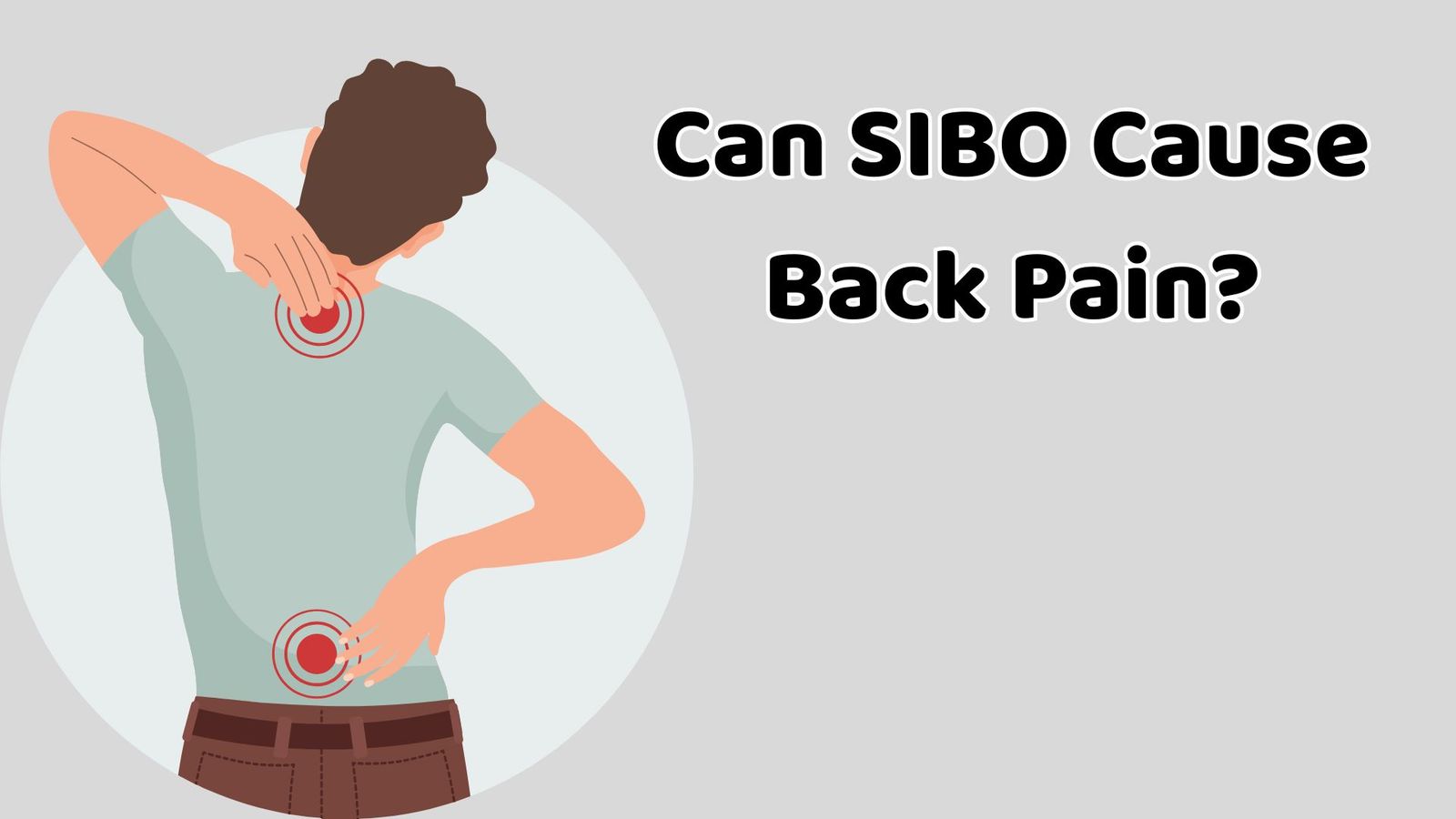
How SIBO Can Trigger or Worsen Back Pain?
Let’s explore three key mechanisms that link SIBO to back pain:
1. Referred Pain from Internal Organs
Your digestive organs are powered by the same spinal nerves that serve your back muscles. When inflammation builds up in the small intestine due to bacterial overgrowth, your nervous system may interpret this as pain coming from your back.
In this circumstance, your spine is not the problem—it’s your gut that is crying out for help, and your brain is misinterpreting the signal.
Think about a heart attack that can radiate pain into the arm or jaw? The same concept applies to the SIBO referred pain. The gut can send pain signals that radiate into the mid or lower back.
2. Chronic Inflammation and Systemic Pain
When SIBO is present, your body mounts a low-grade, chronic inflammatory response. The body is flooded with inflammatory compounds called cytokines. These bad boys don’t just stay confined to the gut.
They travel through your bloodstream, aggravating nerves and increasing the perception of pain in muscles and joints. It’s like your entire body is on high alert, and even mild back tension can become excruciating.
This systemic inflammation can also aggravate pre-existing back issues like arthritis or disc degeneration, turning a mild problem into a major one.
3. Poor Posture and Muscular Imbalance
Let’s be honest: when your belly is bloated, gassy, and cramping, your posture suffers. People with SIBO often hunch forward to relieve pressure in their abdomen. Over time, this leads to muscle imbalances, tight hip flexors, and weakened core muscles—all of which contribute to lower back strain.
In my clinical experience, many patients suffering from “unexplained” back pain, particularly women with IBS-type symptoms, experience significant relief once we treat their SIBO and restore proper gut function.
Real-Life Example: Susan’s Story
Susan, a 45-year-old schoolteacher, came to me with chronic lower back pain. She had been to orthopedic specialists, tried chiropractic adjustments, physical therapy, and even pain medications—all with little to no lasting relief.
When I asked about her gut health, she also reported bloating after meals, irregular bowel movements, fatigue, and brain fog. Those symptoms justified a separate digestive evaluation; they did not prove that SIBO caused the back pain.
Her digestive symptoms and back discomfort improved during the same period of care. That clinical observation is useful, but it cannot tell us which change produced the improvement. This is why I avoid promising that “fixing the microbiome” will resolve structural or neurologic back pain.
Why the Connection Is Easy to Overstate
Specialists often evaluate the back and digestive tract separately because each system has different urgent diagnoses and evidence-based tests. The body is still an integrated whole, so good care also looks for patterns across systems and coordinates referrals when needed.
In my work, I ask what is causing the pain and what findings support that explanation. Back pain is common, and SIBO is not a routine cause. Improving digestive symptoms and back pain at the same time can be meaningful to a patient, but it does not prove one caused the other.
What Can You Do?
If you suffer from chronic back pain and any of the following gut-related symptoms, SIBO could be the hidden link:
- Bloating or gas after meals
- Irregular bowel movements
- Brain fog or fatigue
- Abdominal cramping
- Food sensitivities
Here’s what I recommend:
- Complete a SIBO symptom questionnaire – The simplest and quickest way to identify if you’re a victim of SIBO.
- Start a food journal – Identify any connections between what you eat and how your back feels.
- Avoid carbs from hell – Refined sugars and processed grains feed the bad bugs.
- Seek out a functional medicine provider – Partner with a physician who understands the gut-body connection.
Final Thoughts
The next time you reach for painkillers or consider another spinal injection, ask yourself: Could my back pain be coming from my belly?
Don’t let a bloated belly and bad bugs steal your quality of life. By addressing gut health, you might not only relieve digestive distress but also finally find freedom from back pain that has plagued you for years.
Your back may be crying for help, but the signal may be coming from your small intestine.
Join GUT RESTORATION COMMUNITY
Dr. J’s evidence-based perspective
In my clinical work, I treat symptoms as clues—not proof of a diagnosis. I listen to the full history, look for common and serious alternatives, and use testing when it can change the plan. I also avoid turning a short-term symptom diet into a permanent list of forbidden foods.
When to seek medical care
Contact a clinician promptly for blood in the stool, black stool, persistent vomiting, fever, dehydration, anemia, progressive trouble swallowing, severe abdominal pain, or unintentional weight loss. These are not symptoms to manage with diet or supplements alone.