
SIBO
11 SIBO Breath Test Prep Mistakes That Can Affect Your Results
Written by Dr. James Krystosik · Published September 28, 2026
Functional Medicine Physician, Chiropractor, Author, Podcast Host · In practice since 1986
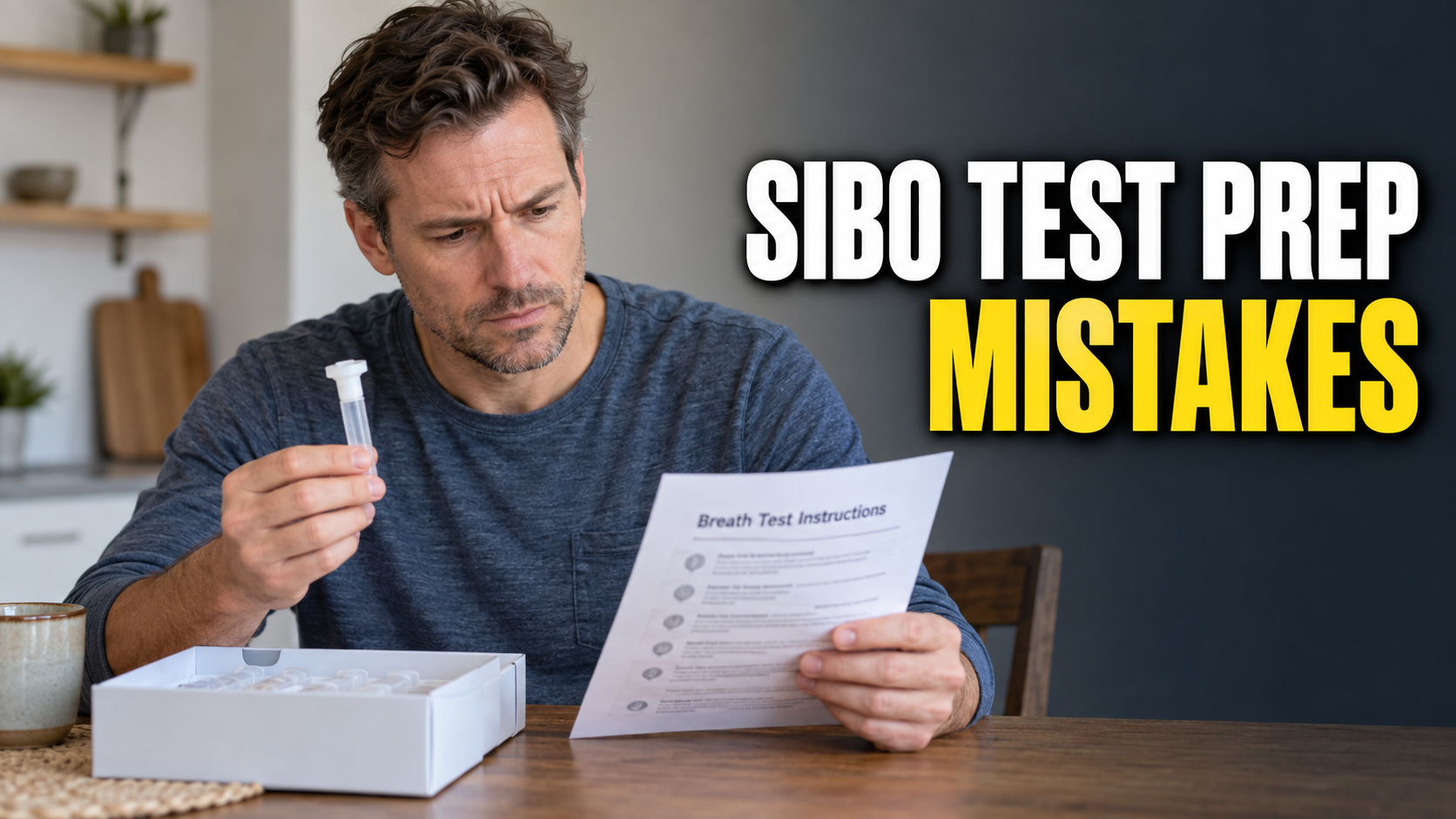
Quick answer: The biggest SIBO breath test mistakes are improvising the prep diet, fasting for the wrong amount of time, testing too soon after certain medicines or a bowel cleanse, smoking or exercising during the test, and collecting poor samples. Follow the instructions from your lab, because protocols aren't identical.
A breath test looks almost too simple. Eat a plain diet, skip breakfast, blow into a bag or tube a few times, and you're done.
Then the report comes back with a high baseline or a pattern nobody can interpret. Now you're wondering whether you have SIBO, whether you prepared incorrectly, or whether you just spent money on an unusable test.
I've seen enough confusing breath tests to say this plainly: the prep isn't busywork. It's part of the test.
Mistake 1: Following a random prep list from the internet
Use the instructions that came with your kit or were provided by the testing lab. Different labs may use different substrates, collection systems, timing, and medication rules.
If my instructions disagree with the lab's instructions, I call the lab. I don't combine two protocols and hope for the best.
Mistake 2: Guessing what “low-fermentation diet” means
The day-before diet is intentionally limited so that yesterday's meal doesn't create a high amount of gas before the test begins. This isn't a long-term SIBO diet. It's short-term test preparation.
Patients sometimes add foods because they seem healthy—beans, onions, garlic, whole grains, fruit, fermented foods, or a big salad. Healthy food can still interfere with the purpose of that preparation day.
Eat only what your lab permits. Don't turn the prep day into a recipe experiment.
Mistake 3: Fasting too little—or for much longer than instructed
Most protocols use an overnight fast, often around 8 to 12 hours. Water may be allowed, but coffee, tea, flavored water, gum, mints, and supplements may not be.
Longer isn't automatically better. Follow the assigned window and test at the instructed time.
Mistake 4: Testing too soon after antibiotics
Antibiotics can change intestinal bacteria and gas production. Major consensus guidance has commonly recommended avoiding antibiotics for about four weeks before testing when clinically safe and when the prescribing clinician agrees.
Don't stop a necessary antibiotic to protect a breath test appointment. Your health comes first. Call the ordering clinician and reschedule if needed.
Mistake 5: Forgetting about laxatives, prokinetics, probiotics, or a bowel cleanse
Anything that changes transit or the microbial environment may change the test. That includes some laxatives, motility medicines, probiotics, prebiotics, and colonoscopy preparation.
The correct pause isn't the same for every product or every patient. I review the actual names and doses rather than telling somebody to “stop all supplements.” Prescription medicines should only be changed with the prescriber's guidance.
Mistake 6: Smoking, vaping, chewing gum, or eating during the test
These can alter breath samples, introduce swallowed air, or stimulate digestion. Once testing starts, don't snack between samples because you're hungry. Plan a quiet morning and bring food for afterward.
Mistake 7: Doing a workout before or during collection
Physical activity can affect breathing and gas measurements. This isn't the morning for a hard run, gym session, or repeated trips up the stairs between samples.
Sit calmly. Keep the conditions boring and consistent. Boring is good on test day.
Mistake 8: Skipping the baseline instructions
Some labs include toothbrushing or an antiseptic mouth rinse because oral bacteria can contribute to early gas readings. Other kits give different directions.
Follow the kit exactly. Don't add mouthwash when it isn't requested, and don't skip it when it is.
Mistake 9: Blowing incorrectly
The lab needs an end-expiratory breath sample, not a tiny puff from the mouth. Kits differ, so practice the collection steps before the timer begins.
Make sure the tube, bag, or needle connection is secure. Label every sample immediately. A perfect diet can't rescue a leaking or mixed-up sample.
Mistake 10: Losing track of the clock
Collection intervals matter because the timing of a gas rise helps with interpretation. Set alarms before you begin. Record the real collection time if a sample is late instead of pretending it was on schedule.
I also ask patients to note symptoms—bloating, pain, nausea, gas, or urgency—at the time they occur. Symptoms don't diagnose SIBO, but they add context.
Mistake 11: Treating the graph as a diagnosis by itself
A breath test is one piece of a clinical picture. Rapid transit, slow transit, altered anatomy, oral fermentation, constipation, and preparation problems can complicate interpretation.
A hydrogen rise of at least 20 parts per million above baseline by 90 minutes is widely used to support hydrogen-predominant SIBO. Methane at 10 parts per million or more at any point supports intestinal methanogen overgrowth. Those numbers still need to be interpreted with the protocol, symptoms, and history.
My test-day checklist
Before I trust a result, I want five simple things to be true:
- the correct prep diet was followed;
- the fast was completed as instructed;
- recent medicines, supplements, and procedures were reviewed;
- the baseline and every timed sample were collected properly;
- symptoms and any deviations were written down honestly.
If one item went wrong, tell the clinician or lab. Hiding a mistake doesn't make the test more accurate—it just makes the report harder to understand.
What if your baseline is already high?
Don't panic and don't diagnose yourself from the first number. A high baseline may reflect incomplete preparation, oral fermentation, constipation or slow transit, or a true pattern that needs clinical interpretation. In some cases, repeating the test under carefully controlled preparation is more useful than treating immediately.
I explain this in detail in High Baseline Hydrogen on a SIBO Breath Test.
My bottom line
The best SIBO test isn't the most expensive kit. It's the test that was ordered for a sensible reason, prepared for correctly, collected carefully, and interpreted alongside your actual symptoms.
Don't guess through the prep. Ask before test day.